It's been a month since my last post and I have lots to share with you, so
please bear with me.
If you follow me on Instagram, you'll know I have an interest in traditional
Korean crafts and have been collecting books on the subject. I'm interested
in learning the traditional embroidery techniques but also what is called
규방공예 - kyubang gongye, which literally translates to ‘ladies living
space’. In other word, all crafts done by ladies in their space like
sewing, embroidery, garment making,...
Through my research on the subject, I found Young Min Lee a maker who uses traditional Korean techniques with a modern aesthetic
who teaches in California. She recently offered a few classes through
Tatter and I signed
up for two of them.
The first class is on a technique called 보자기 -
pojagi (or
bojagi as the letters b and p are interchangeable in Korean) which is a form
of patchwork done with silk or rami fabric. The finished piece is
traditionally square and used to wrap something special. There are different
words used to describe different type of pojagi. For example, an embroidered
pojagi is called a subo and a pojagi used to wrap a gift is called a
yemulbo, which is what we made in the class.
Note: there is another term 조각보 - chogak bo used to describe scrap bojagi made by commoners and closely associated with food coverings. I'm still fuzzy on the details on what would be called a pojagi vs a chogak bo as they can both be square and both are made of smaller pieces of fabric.
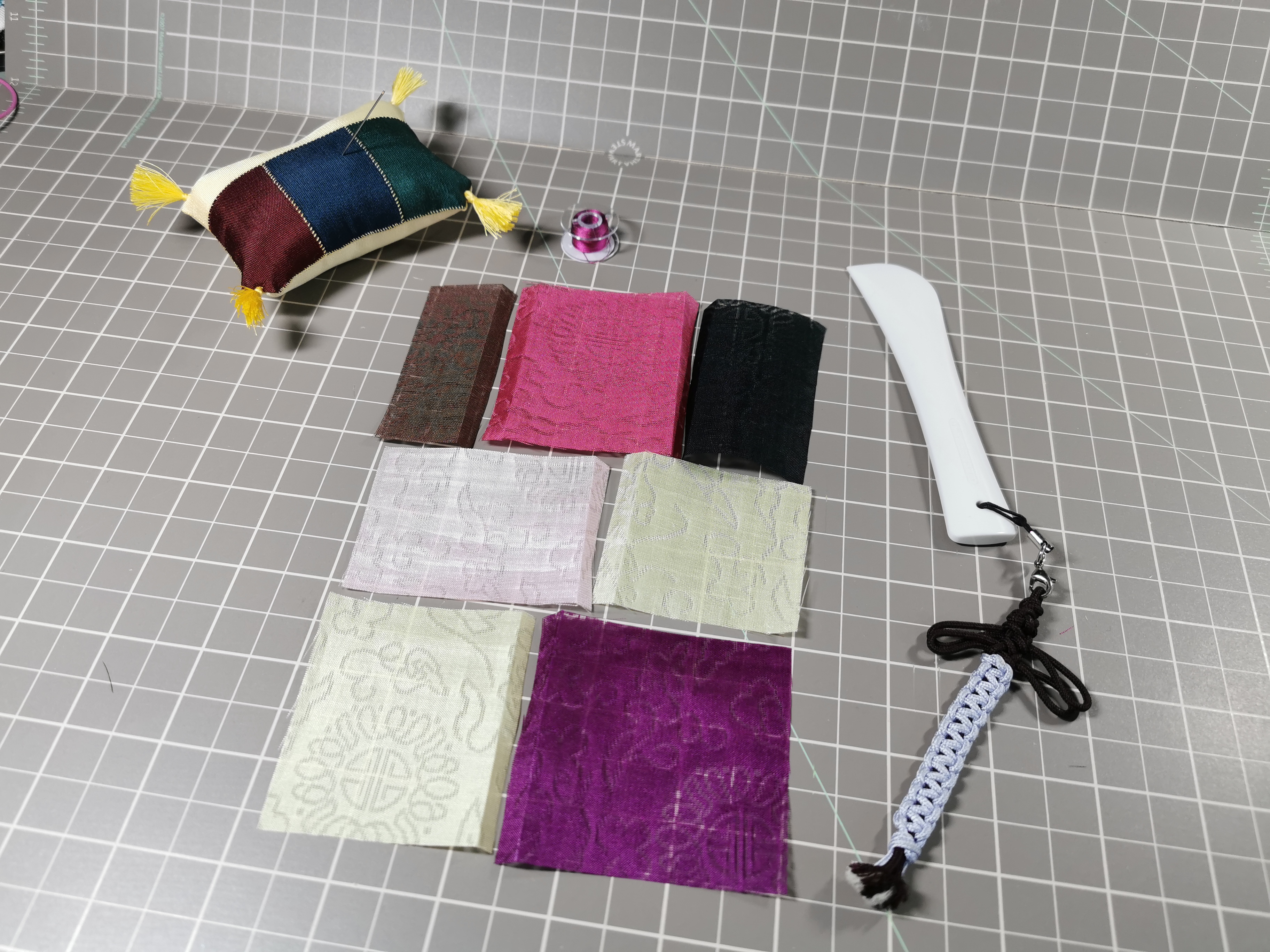
Before class started, I cut up the smaller pieces that are needed for the
first block and marked out the seam allowance using a hera marker. If you're
not familiar with this tool, it's a great quilting tool for marking fabric if
you can't wash it. Once you mark your seam allowance, it's very easy to fold
the fabric along the marked line.
In order to give us the full experience, Young Min sent us real hanbok silk
fabric and thread in our kits. This is what is used traditionally, as they used
scraps leftover from sewing hanbok. However, any non-synthetic fabric could
be used and Young Min shared her recommendations with us so we can experiment
with what we have available here. The resources that were shared during the
lesson was more than worth the cost of the class.
The second class is on a technique called 색실누비 - saeksil nubi. This
technique is a little harder to describe, but the closest technique we have
would be quilting. However, this is not something you'd want to do on a very
large piece as it's very time consuming. I was first introduced to this technique when I discovered an exhibition being held in Korea last year by
Eun Banul and was able to purchase her book. I later learned she is the student of
Kim Yoon-sun, the artisan responsible with reviving this craft.
Saeksil nubi loosely translates to 'colorful thread quilting'. It uses two layers of fabric, hanji (Korean mulberry paper) that is cut into strips and hand rolled into cords, and colorful threads to make quilted texture. This technique was created out of necessity to create storage for small items that could be damaged like tobacco, firestone, thimbles,... Things that could be affected by moisture as the hanji acts as an insulator.
The stitching technique itself is not complicated, it just uses a basic backstitch. The time consuming portion is hand rolling those strips into consistent thicknesses. If you can't find hanji paper, cotton cord could also be used. This craft reminds me a little of the French quilting technique
boutis, with the difference being the order in which the stuffing is done. In boutis, you quilt first and then insert the stuffing, while in saeksil nubi you stuff as you go.
I haven't made much progress on mine as I was more interested in the resources being shared but I will enjoy working on the little piece that I have.
If you are interested in learning either of these techniques or other, Young Min routinely offers classes and advertises them through her newsletter. You can sign up through her website.